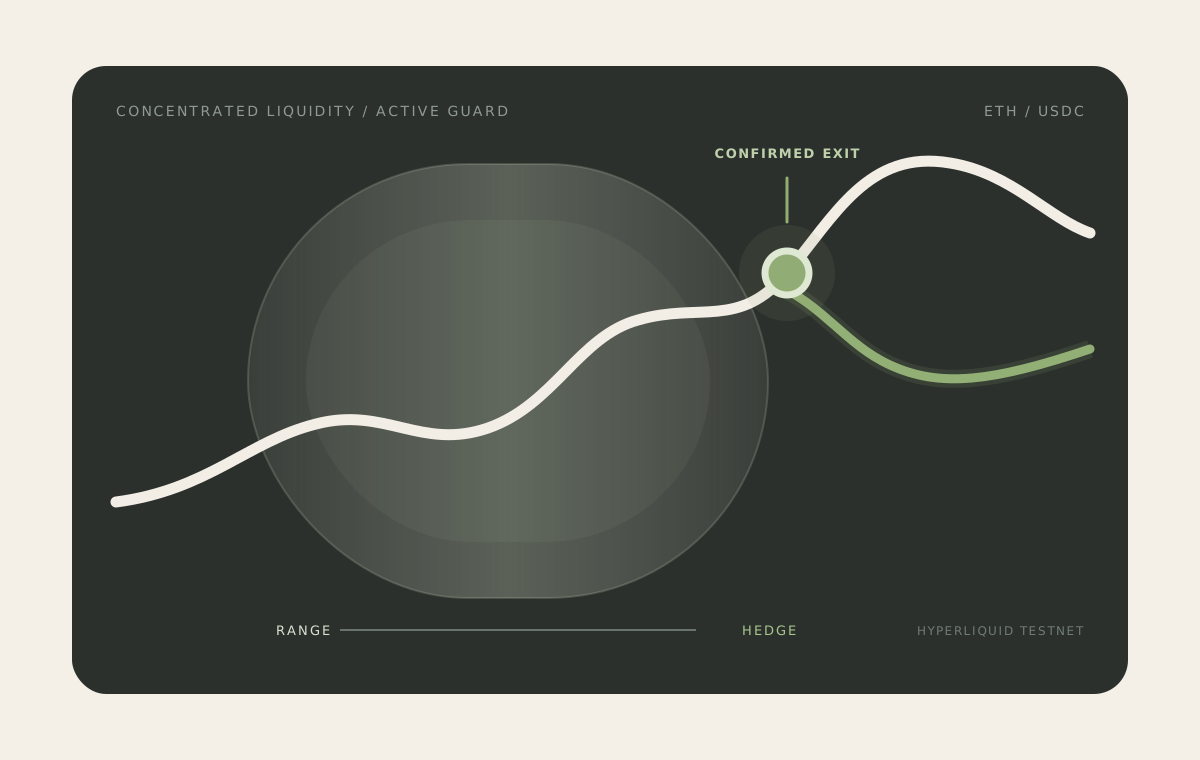
A stateful bot that watches Uniswap V3 ranges and opens or closes directional hedges on Hyperliquid testnet.
recreatedEditorial cover for the range-exit and hedge lifecycle.
At a glance
What I owned
Period
March 2026 to present
Role
Product and full-stack implementation
Team
Independent build
Users
Concentrated-liquidity operators testing how to manage directional exposure after a range exit
Status
Public source; hedge open and close verified on Hyperliquid testnet
Contribution
Built pool monitoring, hedge execution, encrypted key storage, SQLite state, dashboard controls, circuit breakers, and the anti-whipsaw redesign.
Tradeoff
Respond quickly enough to a real range exit without paying fees and slippage on every short-lived boundary crossing.
Evidence
Public repository, dated testnet walkthrough, observed trade trace, and explicit documentation of what linear perp hedges cannot cover.
Source
Public repository
Venue
Hyperliquid testnet
Observed trace
11 hedge entries
Modeled saving
63.5% on that trace
01
One position, several state boundaries
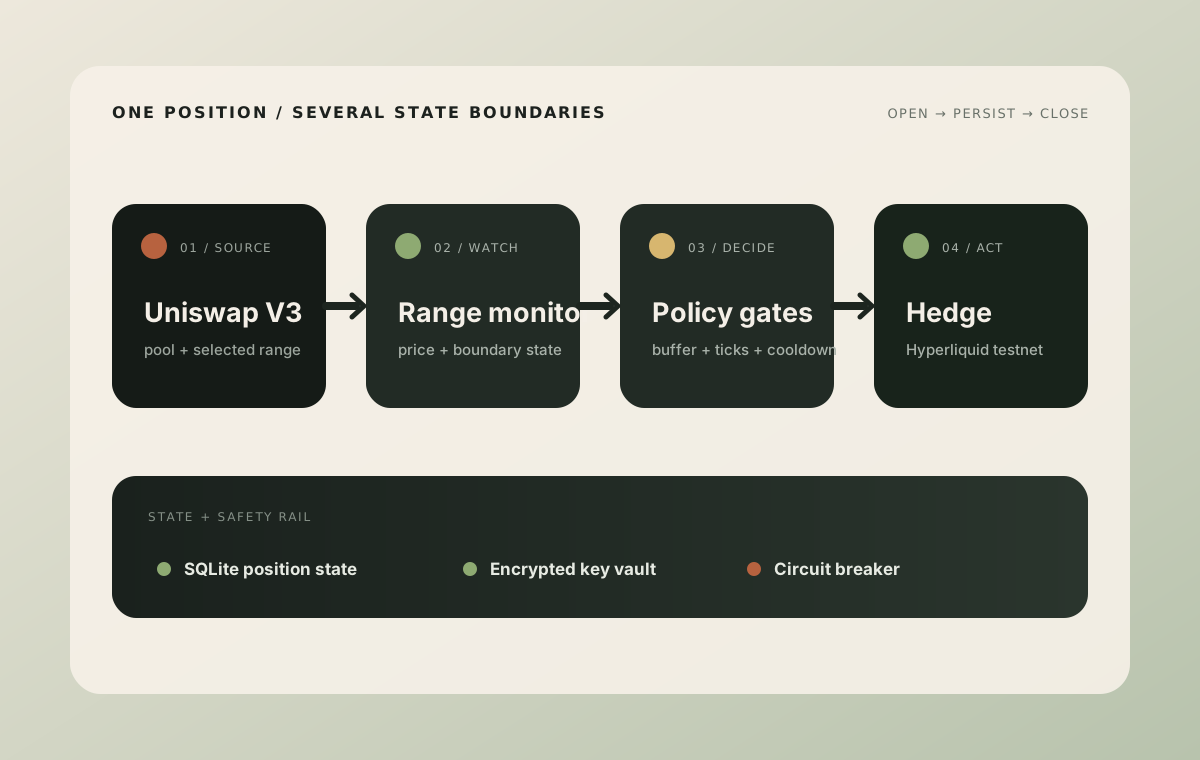
The bot watches a Uniswap V3 pool, confirms that price has left the configured range, sizes a directional hedge, executes it on Hyperliquid testnet, persists the result, and closes the hedge after price returns.
recreatedPool state moves through monitoring and policy gates before execution; position state and safety controls persist below.
02
The first strategy reacted too literally
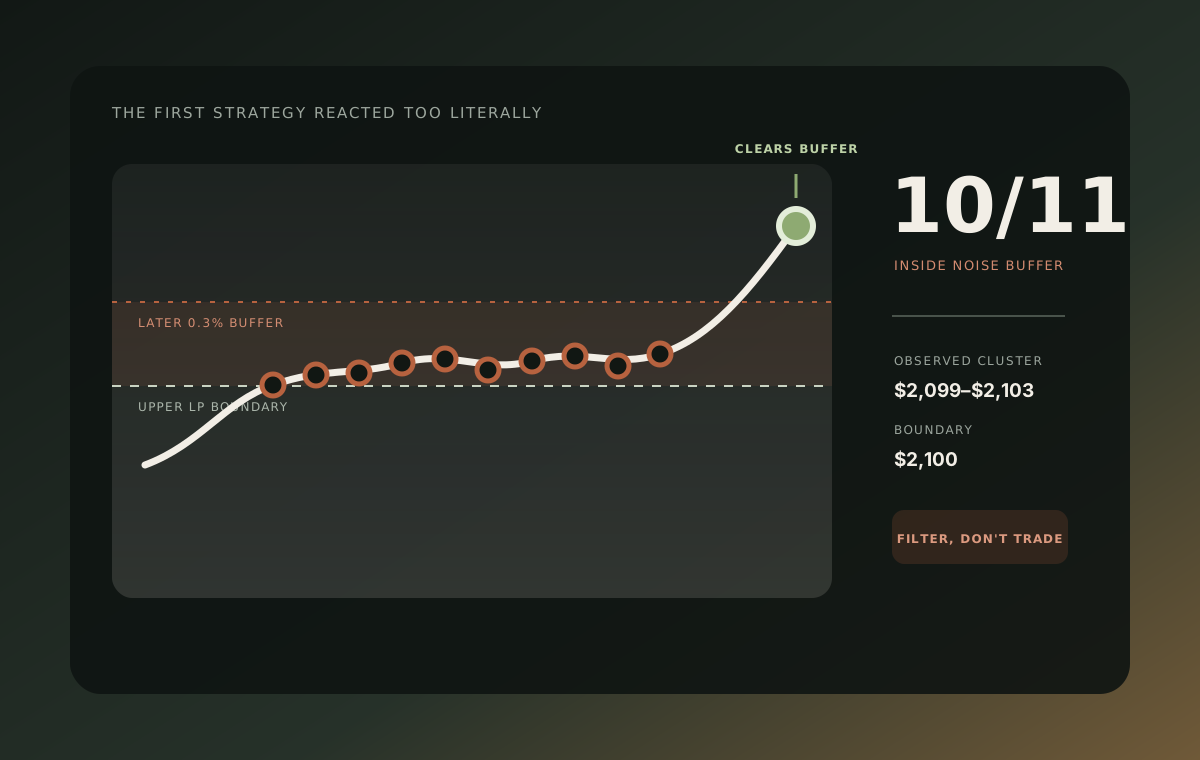
A dated ETH/USDC testnet trace contained 11 hedge entries near the upper range boundary. Ten of 11 were inside the later 0.3% noise buffer. Opening and closing on those crossings turned correct event detection into repeated fees, slippage, and loss.
recreatedTen of eleven observed entries sat inside the later confirmation buffer.
03
The redesign came from the failure
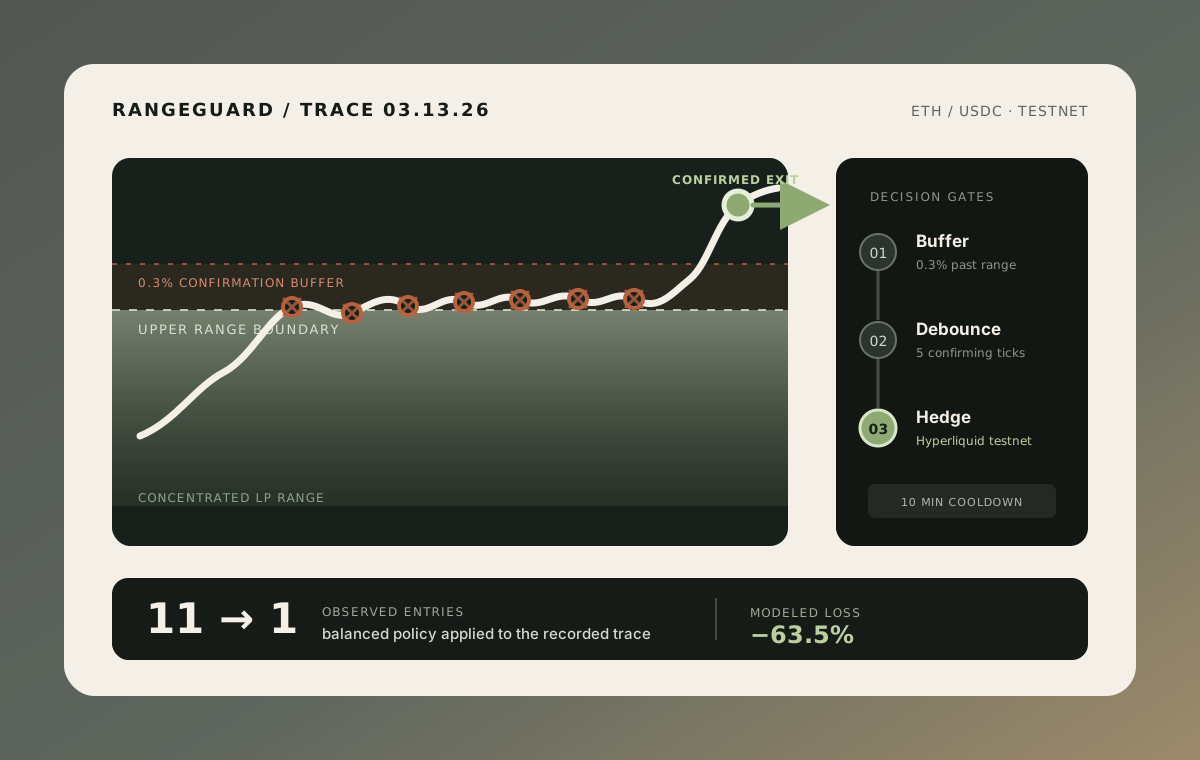
The balanced policy combined a range buffer, five-tick debounce, and ten-minute cooldown. Applied to the recorded trace, it kept one entry instead of 11 and reduced modeled total loss from $11.16 to $4.07, a 63.5% reduction on that dataset.
recreatedBalanced policy on the recorded testnet trace: 11 observed entries, one accepted hedge.
04
The hedge has a hard limit
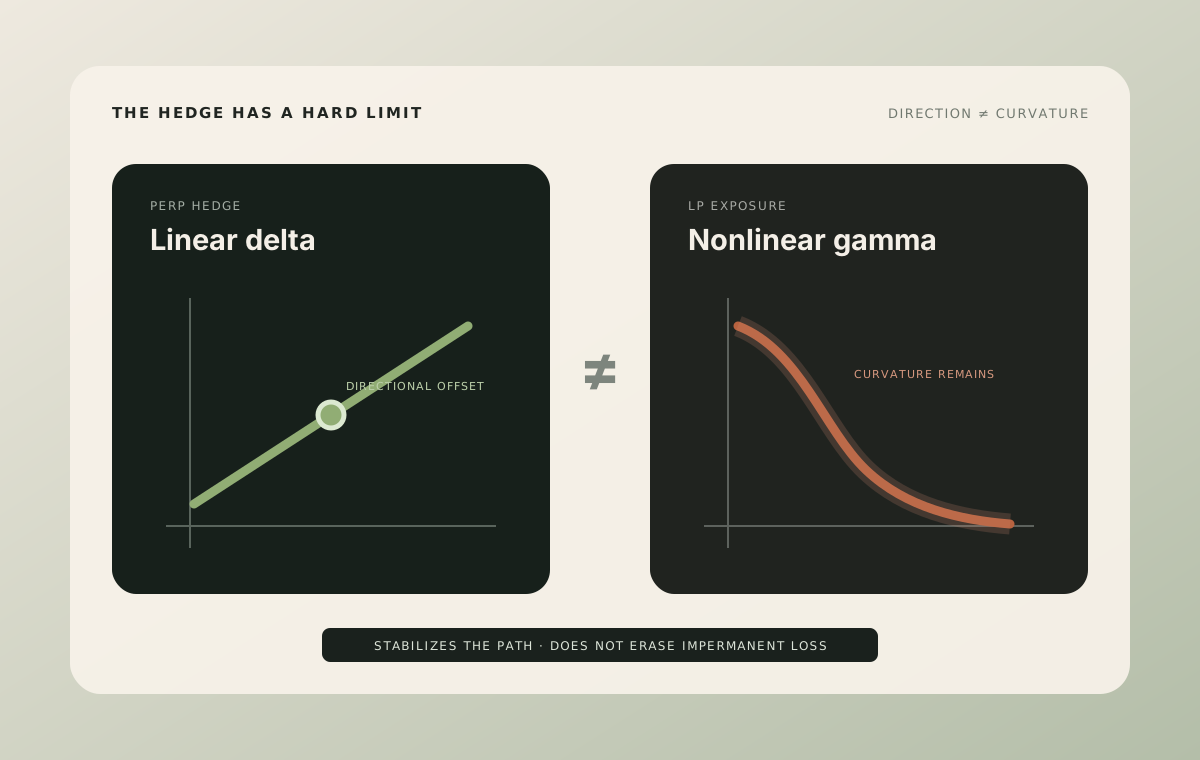
Linear perps can reduce directional delta after a range exit. They cannot hedge the LP position's nonlinear gamma, so RangeGuard is useful for testing stateful risk controls and P&L-path stabilization, not for claiming that impermanent loss disappears.
recreatedA perp can offset direction; the LP position's curvature remains.